
A Partnership with the Kidney Graft
Hepatitis C in Renal Disease, Hemodialysis and TransplantationThis flow traces the changing relationship between a transplant recipient and an allograft exposed to HCV, rejection, and immune injury.
increasing Bearing strength in each event
 decreasing
Bearing strength in each eventdecreasingGift of Function
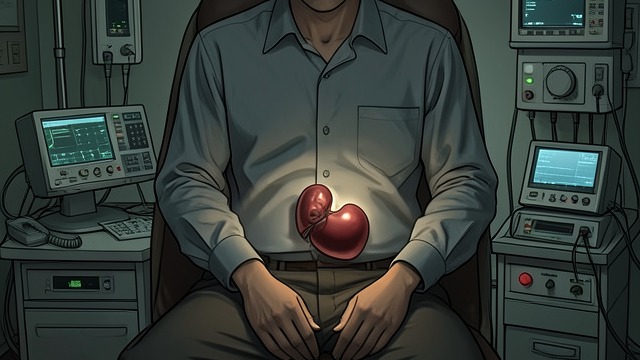
Gift of Function
A new dependence
The transplanted kidney restores filtration and offers release from dialysis. The recipient’s future becomes tied to an organ received through another person’s death or generosity.
Fragile security
The graft is protected by immunosuppression but exposed to infection, metabolic injury, and alloimmunity. Gratitude is inseparable from vigilance.
Signals of Harm
Signals of Harm
The graft communicates indirectly
Proteinuria, hematuria, and declining renal function indicate that the allograft may be under attack. HCV-related MPGN and transplant glomerulopathy can produce similar outward signs.
Interpretation becomes care
Biopsy translates the graft’s silent injury into a diagnosis. The relationship is maintained by listening to small laboratory changes before irreversible loss occurs.
Preservation Through Balance

Preservation Through Balance
Protecting without overwhelming
Immunosuppression must prevent rejection without accelerating HCV replication, infection, or diabetes. Antiviral therapy may help the infection but threaten the graft.
Mutual vulnerability
Recipient and allograft share the consequences of every adjustment. The graft survives through a negotiated balance rather than a single curative intervention.
immediately after Kidney transplantation
when proteinuria or rising creatinine appears
during long-term posttransplant care
